
Features
1. Outfitted with systems for dust, noise, and cooling sprays, among other things, to meet the environmental standards of the project.
2. In order to meet the requirement for safe and effective production, the system may be equipped with a network all-around video surveillance system, automated integrated control system, and remote operation and maintenance system.
3. The equipment attachments have good versatility and are easy to maintain, and the device’s core structure has the distinctive benefit of independent design.
4. The chain plate feeding structure, movement, and operating efficiency are all enhanced by the big torque hydraulic motor that powers the preload roller. It also uses less energy.
Key Components of Scrap Metal Shredding Line
Feeding & Pre-sorting System
- Heavy-duty Hopper: Temporarily stores scrap materials and ensures continuous feeding to the shredder.
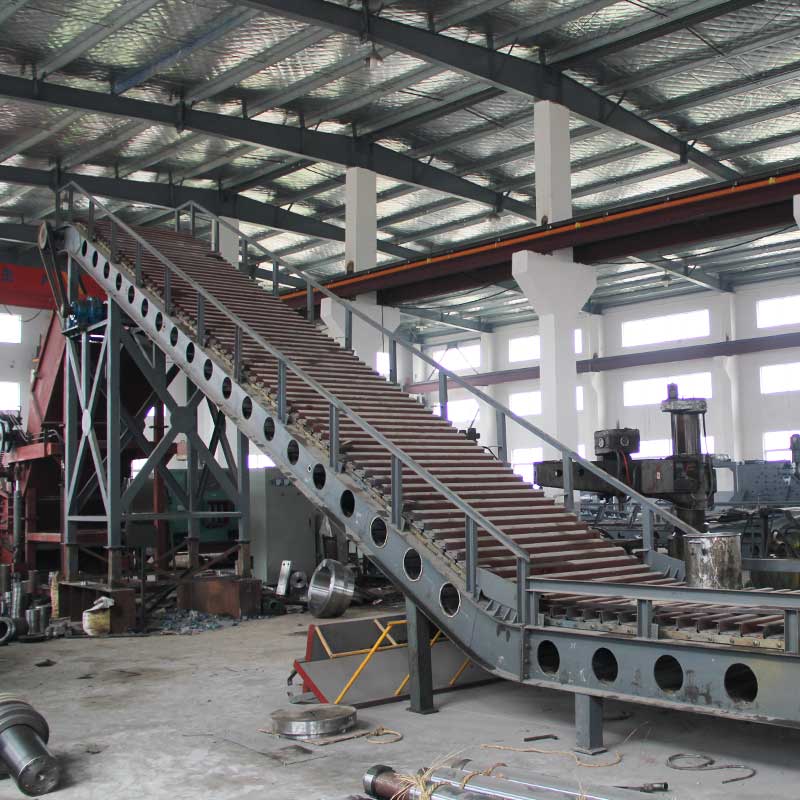
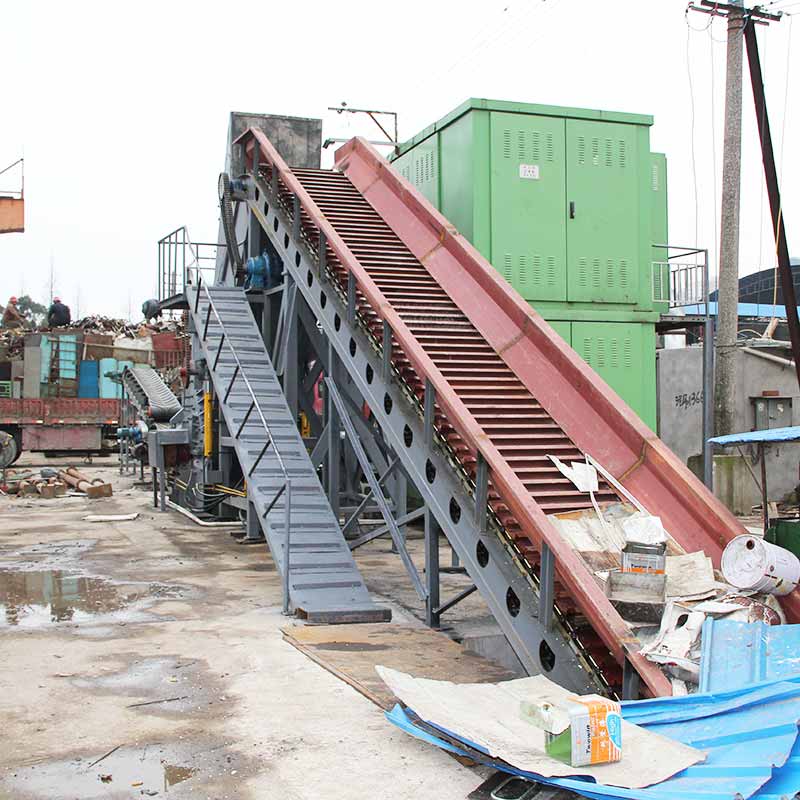
- Conveyor Belts: Transport scrap to the shredder or preprocessing area.
- Magnetic Separator: Extracts ferrous metals while leaving non-metallic materials behind.
- Manual or Mechanical Sorting Station: Removes oversized, hazardous, or non-shreddable items.
Primary Shredding Equipment
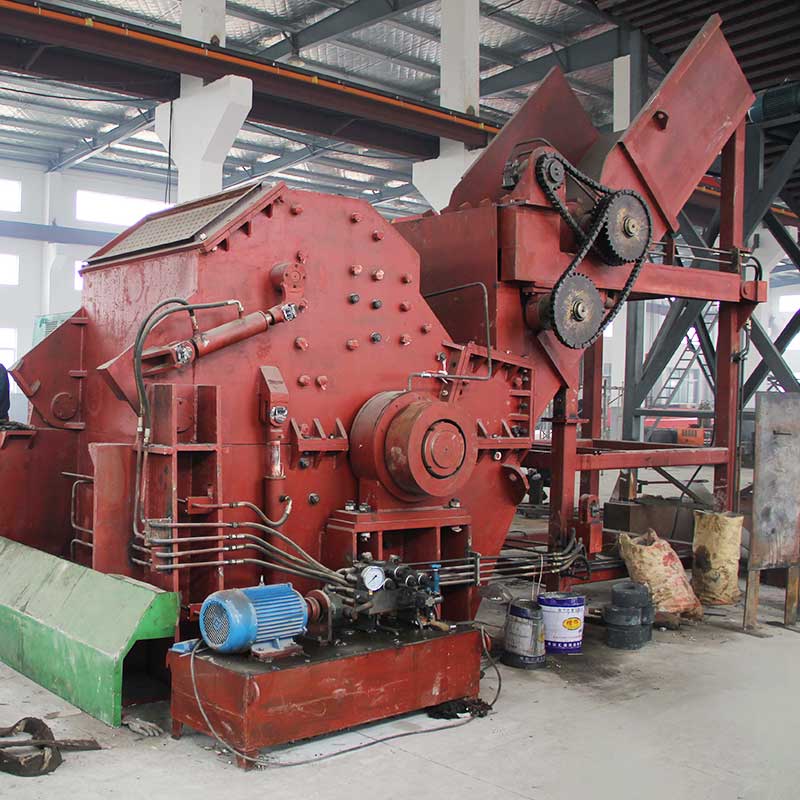
- Large Double Shaft Shredder: Shreds large scrap pieces such as cars and home appliances.
- Single Shaft Shredder: Ideal for lighter scrap, offering fast processing.
- Quad Shaft Shredder: Handles special materials, providing finer shredding capabilities.
Secondary Shredding & Granulation
- Shear Shredder: Cuts and compresses specific metal materials.
- Hammer Mill: Further crushes shredded materials to control particle size.
- Roller Crusher: Provides fine crushing and compaction.
Separation & Sorting System
- Magnetic Separator: Removes ferrous metals again for better purity.
- Eddy Current Separator: Separates copper, aluminium, and other non-ferrous metals from non-metal substances.
- Vibrating Screen: Sorts materials by size, separating different particle sizes.
- Air Separator: Separates materials by density differences.
Conveying & Storage
- Conveyor Systems: Efficiently transport materials between processes.
- Hoppers/Bunkers: Store processed metal granules or blocks.
- Baler/Compactor: Compresses shredded materials into standard blocks or bales for transport.
Dust & Cooling Control
- Spray Cooling System: Prevents excessive heat during shredding.
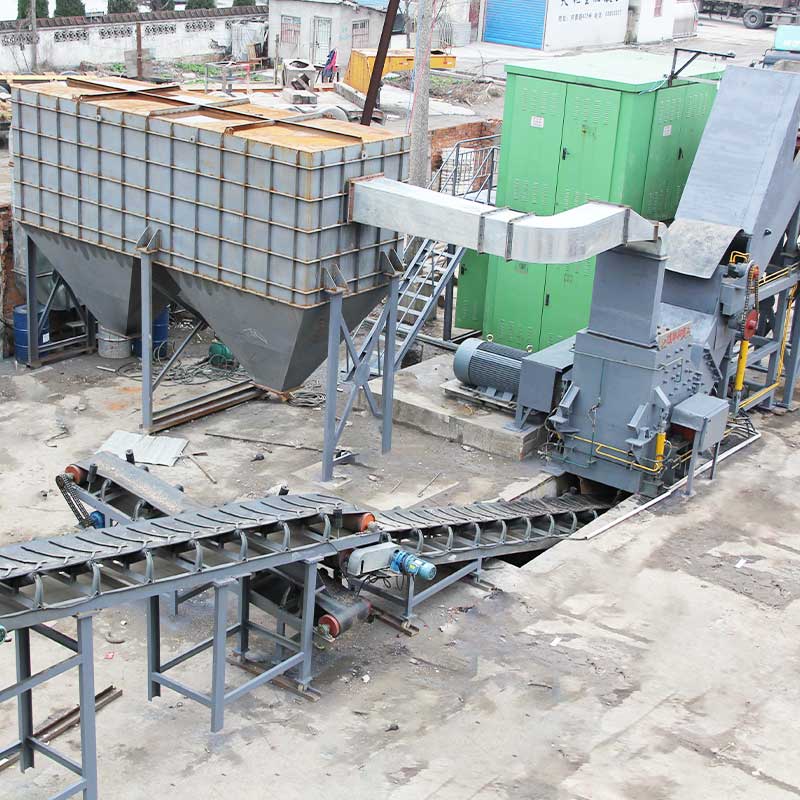
- Dust Collection System: Reduces metal dust impact on the environment and equipment.
- Noise Reduction Equipment: Ensures the line meets environmental standards.
Control & Safety System
- PLC Central Control System: Enables full-line automation and monitoring.
- Remote Operation & Monitoring: Supports remote management and maintenance.
- CCTV System: Ensures operational safety and facilitates incident tracking.
Technical Specifications
| Model |
Wide of feed opening(mm)
|
Power of machine(kw/HP) |
Capacity(t/h) |
| PSX-90 | 1000 | 90 (120) | 2-3 |
| PSX-160 | 1200 | 160(212) | 4-6 |
| PSX-400 | 1400 | 400(535) | 6-10 |
| PSX-500 | 1600 | 500(670) | 12-18 |
| PSX-700 | 2200 | 750(1000) | 15-20 |
| PSX-900 | 900(1200) | 20-25 | |
| PSX-1200 | 1200(1600) | 25-30 | |
| PSX-1500 | 2500 | 1500(2000) | 30-50 |
| PSX-2250 | 2250(3000) | 50-70 |
Specific Operation Process
1. Feeding and Pre-Sorting
Scrap materials, including scrapped car bodies, tinplate, and old home appliances, are fed into the shredder via a conveyor system or grab bucket. Large or hazardous materials are manually or mechanically pre-sorted to ensure safe processing and avoid damage to the equipment.
2. Primary Shredding
The scrap is directed into the primary shredding chamber, where high-speed rotating hammers crush and tear the materials. The impact force breaks down the bulk scrap into smaller fragments while simultaneously removing coatings and surface contaminants.
3. Magnetic Separation
After shredding, the processed scrap passes through a powerful magnetic separator. This step efficiently removes ferrous materials from non-ferrous components, ensuring that the steel scrap meets purity requirements for steelmaking.
4. Density and Size Optimization
The shredded material undergoes further processing to increase its density and uniformity. Additional rolling or pressing mechanisms may be used to achieve the required volume-specific gravity, making the scrap more suitable for furnace charging.
5. Dust and Residue Collection
An advanced dust collection system captures fine particles and impurities generated during shredding, maintaining environmental compliance and preventing workplace hazards. Light materials such as plastics, foams, and fabric residues are separated and removed.
6. Non-Ferrous Metal Sorting
Through eddy current separators and air classifiers, non-ferrous metals like aluminum and copper are separated from the shredded scrap stream, ensuring maximum material recovery and reducing waste.
7. Output and Storage
The final processed scrap is discharged onto a conveyor system for collection and storage. The high-quality scrap steel, now free from contaminants and uniform in density, is ready for direct use in electric furnaces or further refining processes.
8. Quality Control and Inspection
Before shipment or furnace charging, the shredded scrap undergoes quality control checks. Parameters such as density, purity, and contamination levels are monitored to meet steel plant specifications for “fine material into the furnace.”
Applications
Our scrap shredder lines provide excellent efficiency, safety, and dependability while handling a broad range of materials from several industries. Key applications include:
Automotive Scrap Recycling
Efficiently processes scrapped car bodies, bumpers, and other automotive parts, reducing volume and preparing materials for metal recovery.
Tinplate & Aluminum Processing
Handles tin cans, aluminum sheets, and other lightweight metals with precision, ensuring minimal contamination and high-quality output.
Home Appliance Recycling
Ideal for shredding refrigerators, washing machines, air conditioners, and electronic appliances, enabling streamlined material recovery and recycling.
Industrial Scrap & Manufacturing Waste
Processes sheet metal, iron scraps, steel offcuts, and factory production residues, optimizing scrap handling in industrial facilities.
Material Recovery & Recycling Plants
Supports large-scale recycling operations by integrating with sorting, separation, and downstream processing systems for maximum efficiency.
Construction & Demolition Scrap
Reduces bulky metal debris from construction and demolition projects into manageable sizes, facilitating transport and recycling.
New Energy & Battery Recycling
Shreds battery casings, lithium modules, and other components safely, supporting sustainable recycling in emerging energy industries.