

Metal shredders and metal balers are both important in scrap recycling, but they serve different purposes. Shredders reduce metal size for sorting and processing, while balers compress scrap for storage and transport. The type of material, capacity, budget, and recycling objectives all have a role in the equipment selection.
What Is a Metal Shredder Machine?
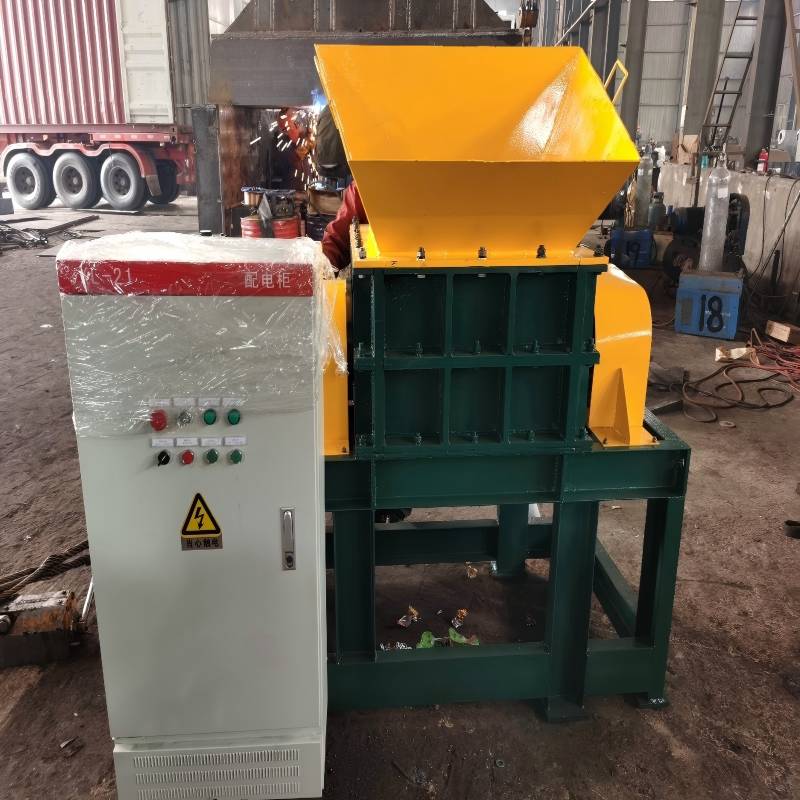
The purpose of a metal shredder machine is to cut, tear, crush, and shear big chunks of metal into smaller, easier-to-manage pieces.
Usually, one or more rotating shafts with hardened steel blades make up the machine. The machine’s blades grab, shred, and chop the scrap metal into smaller pieces as it enters.
Depending on the design, metal shredders may be classified as:
- Single-shaft shredders
- Double-shaft shredders
- Four-shaft shredders
- Hammermill shredders
Each type is designed to handle specific materials and production capacities.
Numerous materials can be processed by metal shredders, such as:
- Steel scrap
- Aluminum scrap
- Copper scrap
- Stainless steel scrap
- Automobile bodies
- Household appliances
- Metal drums
- Industrial waste metal
- Manufacturing offcuts
The primary objective of shredding is size reduction. By reducing the dimensions of scrap metal, shredders make materials easier to sort, transport, separate, and melt.
In many recycling facilities, shredding serves as the first step in a larger material recovery process.
What Is a Metal Baler?
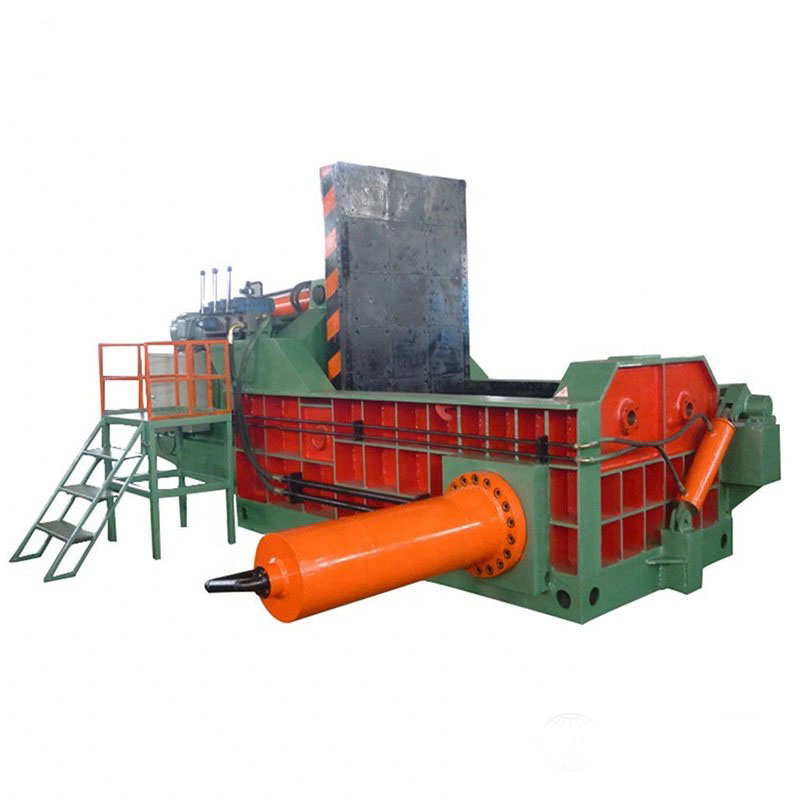
The purpose of a metal baler is to compress free metal debris into tight, compact blocks known as bales.
Balers do not cut or reduce material size, in contrast to shredders. Instead, they use hydraulic pressure to compress scrap into a uniform shape that is easier to store and transport.
The baling process typically involves:
- Loading loose scrap into a compression chamber
- Applying hydraulic force from multiple directions
- Compressing the material into a dense package
- Ejecting the finished bale
Metal balers can process many types of scrap, including:
- Aluminum cans
- Steel scrap
- Copper wire
- Sheet metal
- Aluminum profiles
- Production offcuts
- Metal turnings
- Light-gauge industrial scrap
For facilities that generate large amounts of lightweight scrap, balers can dramatically reduce handling costs.
Key Differences Between Metal Shredder Machines and Metal Balers
Although both machines are widely used in recycling operations, their functions are fundamentally different.
| Feature | Metal Shredder Machine | Metal Baler |
| Primary Function | Size reduction | Volume reduction |
| Processing Method | Cutting and shredding | Hydraulic compression |
| Output Material | Small metal fragments | Dense metal bales |
| Material Liberation | Excellent | Limited |
| Transportation Efficiency | Good | Excellent |
| Storage Efficiency | Moderate | High |
| Separation Capability | High | Low |
| Maintenance Complexity | Higher | Lower |
| Typical Investment Cost | Higher | Lower |
This distinction is often the most important factor when determining which machine is appropriate for a particular application.
Advantages of Metal Shredder Machines
Metal shredders offer numerous advantages for companies focused on material recovery and high-volume recycling.
Better Material Liberation
One of the greatest benefits of shredding is its ability to separate different materials contained within a single product.
Many items entering recycling facilities contain multiple materials, such as:
- Steel
- Aluminum
- Copper
- Plastic
- Rubber
- Foam
Examples include:
- End-of-life vehicles
- Washing machines
- Refrigerators
- Air conditioners
- Industrial equipment
Shredding breaks these products apart and helps liberate valuable materials for sorting and recovery.
This significantly increases recycling efficiency and overall material value.
Reduced Furnace Preparation
Many steel mills and foundries prefer shredded scrap because it is easier to charge into furnaces.
Smaller metal fragments offer several advantages:
- Faster melting
- More consistent furnace loading
- Improved heat transfer
- Better energy efficiency
- Reduced furnace downtime
As a result, shredded scrap often commands a higher market price than loose scrap.
Higher Processing Capacity
Industrial shredders are designed for continuous operation and can handle extremely large volumes of material.
Modern heavy-duty systems may process:
- Several tons per hour
- Entire vehicle bodies
- Large structural components
- Industrial demolition scrap
For high-volume recycling operations, shredders provide unmatched productivity.
Improved Material Consistency
Shredded metal generally has a more uniform size compared with loose scrap.
Uniform material improves:
- Conveyor feeding
- Magnetic separation
- Eddy current separation
- Downstream sorting
- Furnace charging
This consistency helps create a more efficient recycling process.
Increased Scrap Value
Because shredded scrap is cleaner, more uniform, and easier to process, buyers often pay premium prices for properly shredded material.
This additional value can help offset equipment investment costs over time.
Advantages of Metal Balers
Metal balers provide a different set of benefits focused on storage and logistics efficiency.
Reduced Storage Requirements
Loose scrap metal occupies significant space and can quickly overwhelm available storage areas.
By forming scrap into compact, high-density bales, businesses can:
Numerous materials can be processed by metal shredders, such as:
- Store more scrap in less space
- Improve facility organization
- Reduce clutter
- Increase warehouse efficiency
This is especially valuable in urban areas where space is expensive.
Lower Transportation Costs
Transportation often represents one of the largest costs in scrap recycling operations.
Loose metal wastes truck capacity because of its low density.
Balers solve this problem by producing compact packages that maximize payload utilization.
Benefits include:
- More material per shipment
- Fewer truckloads
- Reduced fuel consumption
- Lower transportation costs
For businesses shipping large quantities of scrap, these savings can be substantial.
Easier Material Handling
Baled scrap is easier to move than loose metal.
Dense bales can be easily moved and managed with:
- Forklifts
- Cranes
- Grabbers
- Automated material handling systems
This reduces manual labor and improves workplace safety.
Lower Initial Investment
In many cases, balers require a smaller capital investment than industrial shredders.
Advantages include:
- Lower purchase cost
- Simpler installation
- Reduced power consumption
- Easier operation
This makes balers attractive for smaller recycling operations and manufacturing facilities.
Improved Workplace Safety
Loose scrap often contains sharp edges and irregular shapes that create safety hazards.
Compressed bales are easier to stack, store, and transport, helping reduce workplace injuries.
When Should You Choose a Metal Shredder Machine?
A shredder is generally the better choice when size reduction and material separation are critical objectives.
High-Volume Recycling Facilities
Large recycling operations handling substantial amounts of scrap typically benefit from shredding.
Common materials include:
- Vehicle scrap
- Industrial machinery
- Demolition waste
- Mixed metal streams
Shredders provide the throughput needed to process these materials efficiently.
Facilities Requiring Material Separation
If recovering multiple materials is a primary goal, shredding is often essential.
Industries that commonly require material liberation include:
- Automobile recycling
- Appliance recycling
- Electronic waste recycling
- Industrial equipment recycling
Without shredding, separating materials becomes much more difficult.
Steel Mills and Foundries
Steel producers often prefer shredded scrap because it improves furnace performance.
Shredded material provides:
- Faster charging
- Consistent melting
- Better productivity
This makes shredders valuable in steel production supply chains.
Operations Processing Oversized Scrap
Large metal items are difficult to transport, store, and recycle.
Examples include:
- Vehicle frames
- Industrial tanks
- Structural steel
- Large appliances
Shredders reduce these items into manageable sizes suitable for downstream processing.
When Should You Choose a Metal Baler?
A baler is often the better choice when transportation and storage are the primary concerns.
Scrap Collection Centers
Collection facilities often receive loose scrap from multiple suppliers.
Balers quickly compress this material into transport-ready packages.
Manufacturing Plants
Many manufacturers generate recyclable scrap during production.
Examples include:
- Sheet metal offcuts
- Aluminum trim
- Stamping scrap
- Steel remnants
Balers provide an efficient solution for managing this waste stream.
Facilities with Limited Storage Space
Where available storage space is restricted, balers offer a practical way to maximize capacity.
By reducing scrap volume, businesses can avoid costly facility expansions.
Businesses Selling Scrap to External Recyclers
If your operation primarily collects and ships scrap rather than processing it, baling is often the most economical option.
The improved transportation efficiency can provide rapid return on investment.
Can Metal Shredders and Metal Balers Work Together?
Many advanced recycling facilities use both technologies within the same processing line.
Rather than choosing one machine over the other, combining both often delivers the highest efficiency.
A typical processing workflow may include:
- Scrap collection
- Preliminary sorting
- Shredding
- Metal separation
- Baling
- Transportation
This integrated approach maximizes material recovery while minimizing logistics costs.
Large recycling plants frequently use shredders for processing and balers for shipping finished scrap products.
Factors to Consider Before Purchasing
Several key factors should be evaluated before investing in either type of equipment. The right choice should match your scrap type, production capacity, site conditions, and long-term recycling goals.
Material Type
Different materials require different processing approaches.
Consider:
- Material hardness
- Thickness
- Density
- Shape
- Contamination level
Hard, thick, or mixed scrap usually requires stronger shredding equipment, while light and loose materials may be better suited for baling. Understanding your material stream is the first step in selecting suitable equipment.
Processing Volume
Estimate current and future throughput requirements.
Questions to consider include:
- Tons per day
- Peak production periods
- Future business growth
Higher volumes generally justify larger equipment investments. If production demand is expected to grow, choosing equipment with extra capacity can help avoid future bottlenecks.
Available Space
Equipment footprint can vary significantly.
Shredding systems often require:
- Feed conveyors
- Sorting systems
- Separation equipment
Balers usually require less floor space and are easier to install in limited workshop areas. Before purchasing, buyers should evaluate site layout, feeding space, discharge area, and maintenance access.
Transportation Requirements
If transportation costs are a major concern, balers may provide significant savings through improved load density. Dense bales allow more scrap to be loaded per truck, reducing shipment frequency and overall logistics costs.
Budget
Budget plays an important role in equipment selection.
Generally:
- Balers require lower investment.
- Shredders require higher investment but may provide greater long-term returns.
The total cost of ownership should be evaluated rather than focusing solely on purchase price. Power consumption, wear parts, labor, maintenance, and output value should all be considered.
Maintenance Requirements
Maintenance affects both operating costs and equipment uptime.
Shredders typically require:
- Blade replacement
- Shaft maintenance
- Bearing inspections
Balers generally require:
- Hydraulic maintenance
- Cylinder servicing
- Seal replacement
Understanding maintenance requirements helps businesses plan operating expenses more accurately and reduce unexpected downtime.
Common Industries Using Metal Shredders and Balers
Automotive Recycling
Vehicle recycling operations use shredders to break down car bodies and balers to compress separated metal scrap for easier transport and resale.
Metal Recycling Plants
Large recycling plants often combine shredders, balers, conveyors, and sorting systems to create complete scrap processing lines with higher recovery efficiency.
Manufacturing Facilities
Manufacturers use balers to compress stamping scrap, sheet metal offcuts, aluminum trim, and production waste, keeping workshops cleaner and reducing disposal costs.
Demolition Contractors
Demolition contractors use shredders to process structural steel, metal beams, pipes, and construction scrap into smaller pieces for recycling.
Waste Management Companies
Waste management companies process mixed material streams with shredders and balers, depending on scrap type, volume, transportation needs, and recycling requirements.

